EN
EN



What Is an RRU and Why It Matters in Modern Tower Infrastructure
Remote Radio Units, or RRUs for short, play a key role in today's cell phone networks. These devices handle radio frequency signals right at or very close to the antennas found on communication towers. When they take those digital signals coming from what's called a Baseband Unit (BBU) and turn them into actual radio waves for sending out, then do the opposite when receiving signals back, this helps cut down on signal losses that happen over long cables running between equipment. Getting these units so close to where the signals actually travel makes everything work better. It also lets network operators implement newer tech stuff like MIMO systems and beamforming techniques which boost how well signals reach people's phones. On top of that, tower companies can build their infrastructure in ways that scale easier and save energy too. Some studies show these RRU setups can slash power losses by around 30 percent compared to older methods. As we roll out 5G across cities and even out into rural areas, having enough RRUs deployed becomes really important for keeping internet speeds fast and connections stable no matter where someone happens to be.
Critical RRU Selection Criteria for Tower-Specific Deployments
Power, Form Factor, and Environmental Hardening for Outdoor Tower Use
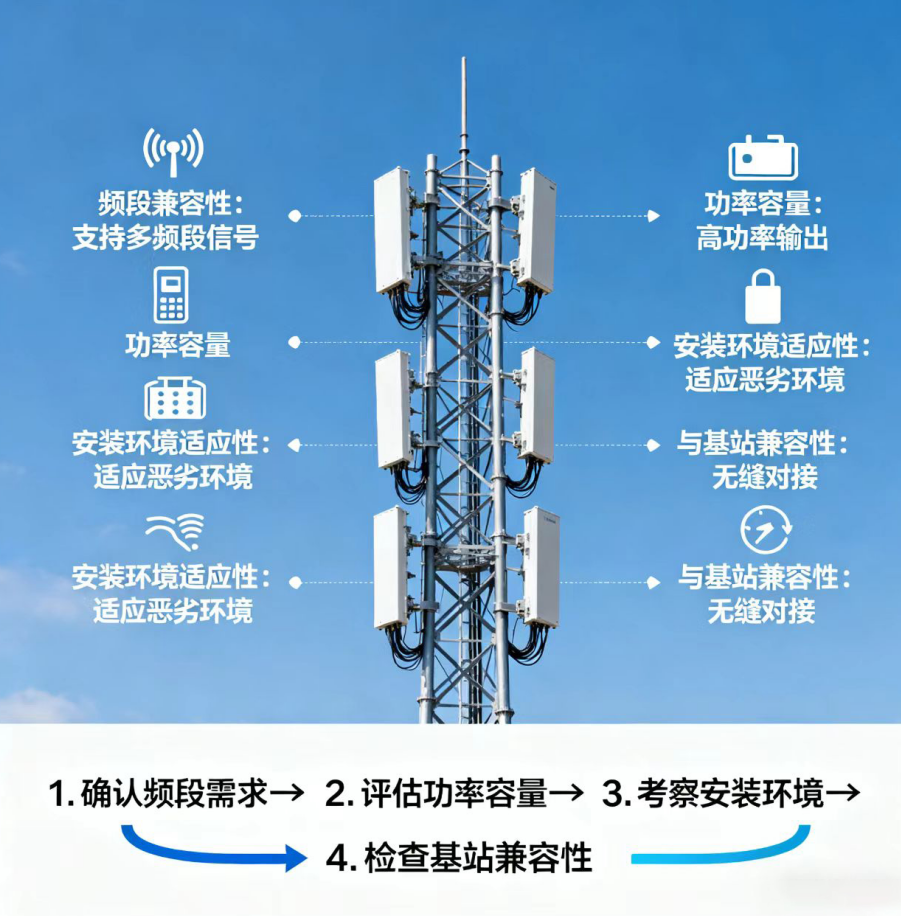
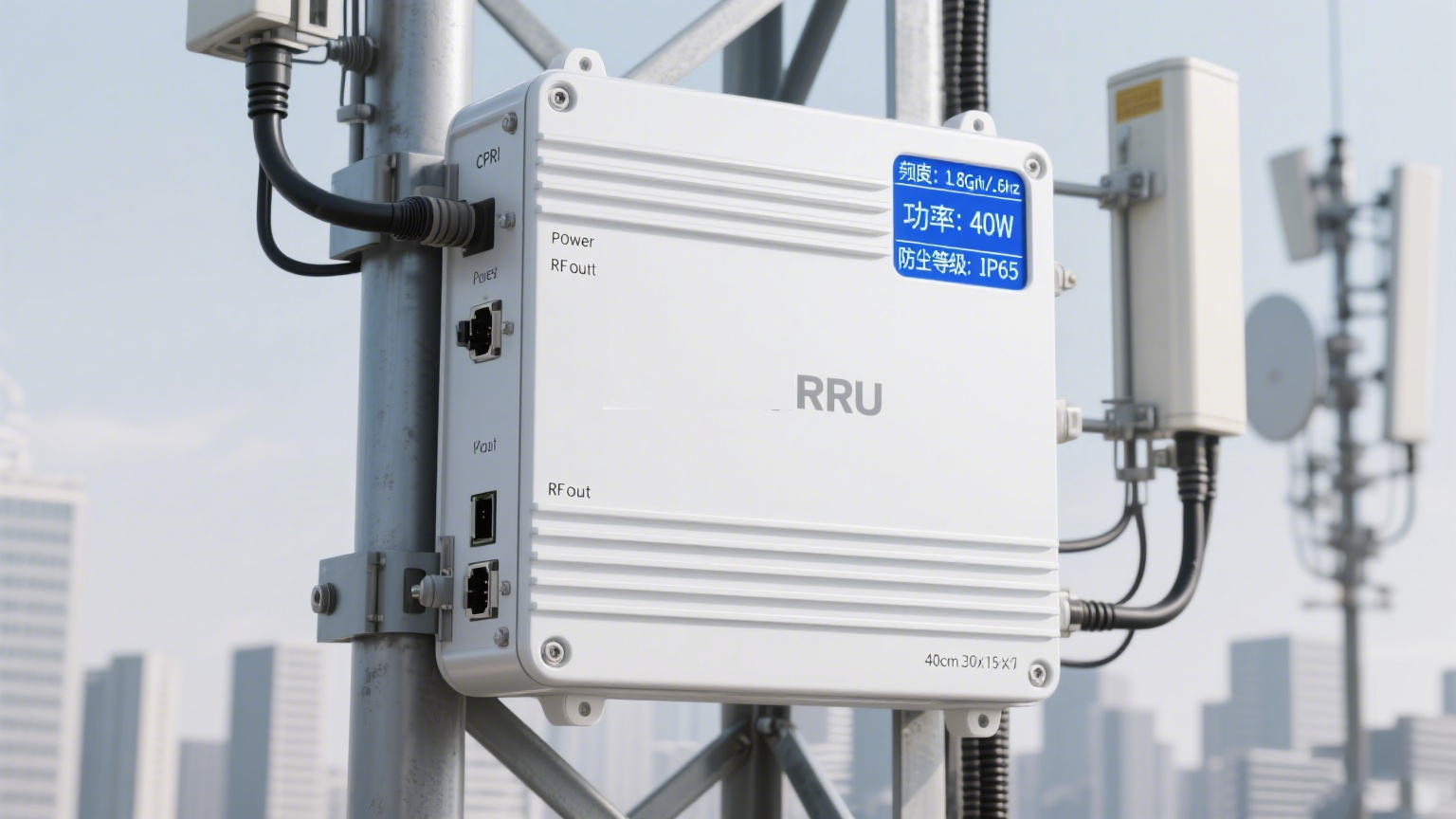
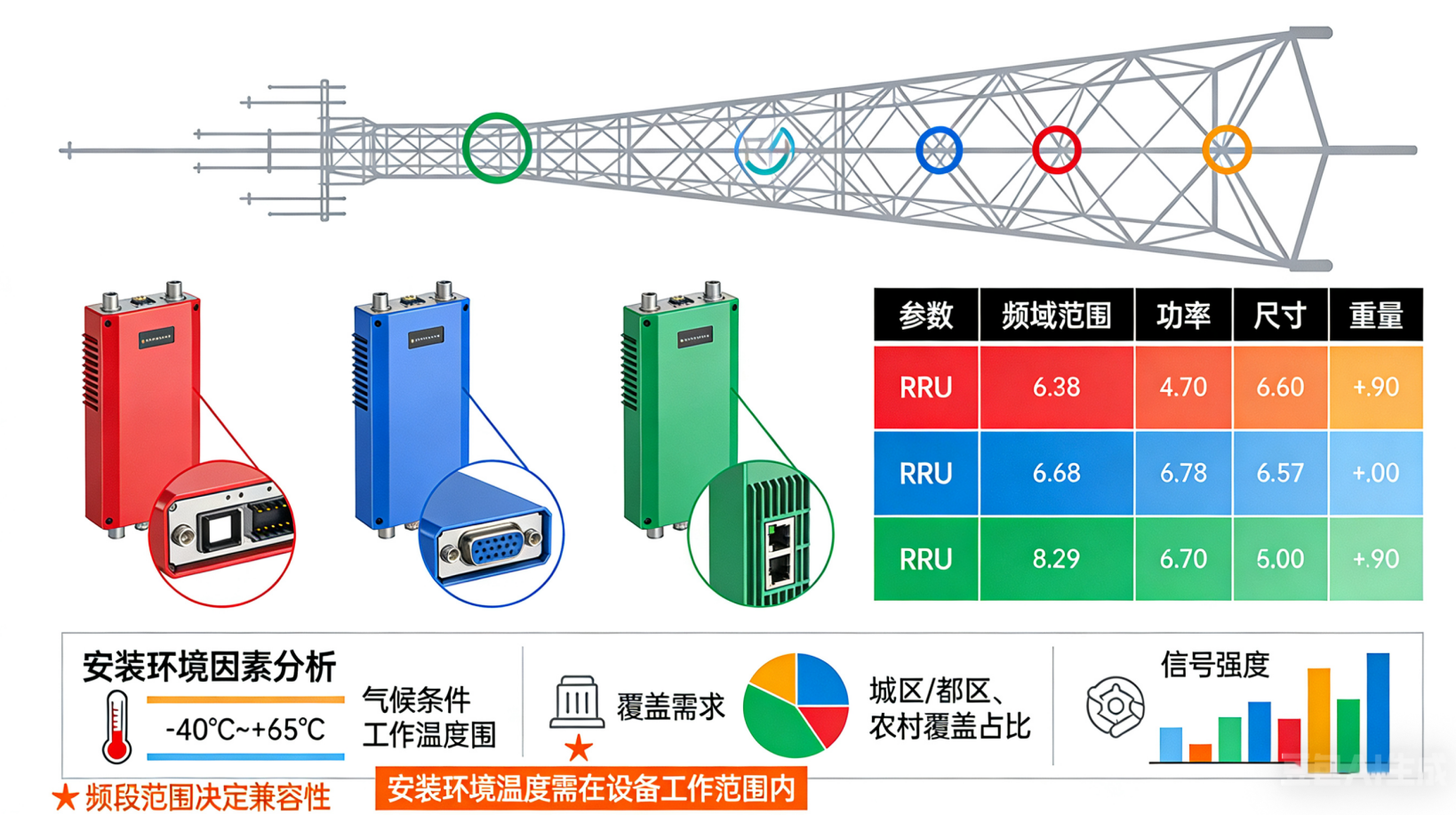
When picking an RRU for tower installation, there are three main physical considerations that matter a lot. Power is probably the first thing to check since most outdoor installations run on either -48 VDC or +24 VDC instead of regular AC power found inside buildings. Then comes the form factor question. Most towers have racks that fit either 19 inches or 23 inches wide, so measure what's actually available at the site. Some smaller towers might need wall mounts rather than rack mounting, especially when space gets tight. Environmental durability is another big concern. These units need to survive pretty harsh conditions including temps from minus 40 degrees Celsius all the way up to plus 55, plus dealing with humidity, dust storms, and salty air near coasts. The enclosure should at minimum meet IP65 standards, and materials need to resist corrosion over time. Maintenance records show that RRUs lacking proper protection tend to break down about three times quicker in places like coastal areas or factories. Before buying anything, always compare these specs against actual site survey findings to avoid headaches down the road.
Transport Interface Compatibility (CPRI, eCPRI, OBSAI) and Backhaul Integration
Getting the right transport interface match between RRU and BBU makes all the difference when it comes to how well a network performs. Need to check what protocols are supported first off. Most older 4G setups still rely on CPRI, while newer 5G networks typically go with eCPRI for those split architecture deployments. And don't forget about OBSAI if working across multiple vendors' equipment. The numbers tell an interesting story here too. A recent study from Telecom Integration found that around two thirds of deployment holdups actually come down to problems with mismatched symbol rates or incorrect IQ compression settings. Before wrapping things up, take a good look at backhaul integration requirements as well. Make sure whatever solution fits seamlessly into existing infrastructure without creating bottlenecks later on.
- Fiber reach limitations (CPRI typically limited to less than 15km)
- Synchronization accuracy (phase alignment tolerance less than ±16 ppb)
Conduct latency testing during pre-commissioning, aiming for sub-100μs response times to support real-time services. Field evidence shows that validating transport compatibility upfront reduces post-deployment troubleshooting by 40%, streamlining network activation.
RRU Deployment Best Practices: From Site Survey to Commissioning
Pre-Deployment Considerations: RF Planning, Fiber Reach, and Co-Location Constraints
Getting RRU deployments right starts long before any hardware goes up. Before installation, engineers need to run comprehensive RF propagation models to figure out where antennas should go. These models take into account things like local topography, how built up the area is, and what kind of interference already exists in the environment. Fiber connectivity needs attention early on too. When distances stretch past 300 meters, signal quality drops off significantly, so technicians might need to install repeaters or extra nodes along the way. At sites where multiple systems share space, checking tower weight limits, structural soundness, and making sure there's enough room between existing gear becomes essential work. For older installations (what we call brownfield sites), taking inventory of power supply lines and grounding configurations upfront saves money later when unexpected upgrades become necessary. Smart planners always look for spots where fiber connections are readily available and radio signals face fewer obstacles. This approach makes the whole rollout process smoother and cuts down on potential headaches down the road.
Post-Installation Validation: Signal Integrity, Latency, and Remote Management Readiness
Once everything is installed, thorough testing confirms whether the RRU actually works how it should. Technicians typically grab spectrum analyzers to check if signals are clean enough, making sure unwanted noise stays well below those critical -15 dB levels we all know and love. Latency checks matter too when working with CPRI, eCPRI or OBSAI connections. We're looking at getting under 2 milliseconds response time for those really sensitive applications where timing matters most. For remote management stuff, folks need to test those SNMP traps that alert us when something goes wrong, plus make certain command line access remains secure through proper encryption protocols. Don't forget to run failover scenarios on backup power supplies either. Thermal testing during maximum loads tells us a lot about long term reliability. And finally, keep records of important stats like packet loss rates (ideally under 0.1%) and how much jitter varies from moment to moment. These numbers form our starting point for regular system health checks down the road.