EN
EN




The Core Function of RF Cables in Base Transceiver Station Architecture
RF cables serve as the vascular system of modern telecommunications infrastructure, transmitting critical signals between antennas, transceivers, and processing units in base stations. Their design directly impacts network performance metrics like latency, bandwidth, and error rates across 4G/LTE and 5G systems.
The Foundational Role of RF Cables in Telecommunications and Base Stations
Specialized cables are really what keeps those signals moving throughout cellular networks, allowing those high frequency radio waves to bounce between base transceiver stations (BTS) and their various sector antennas. Standard power cables just won't cut it for this job though. RF coaxial cables come equipped with multiple layers of shielding plus special dielectric insulation that helps keep the signal clean and strong even when dealing with frequencies ranging all the way from 600 MHz right up to 40 GHz. And let's not forget about reliability either. According to industry data, almost 94 percent of all network downtime problems actually stem from issues with RF cabling itself or problems at the connectors.
Integration of RF Cable Assemblies Within Base Transceiver Station (BTS) Design
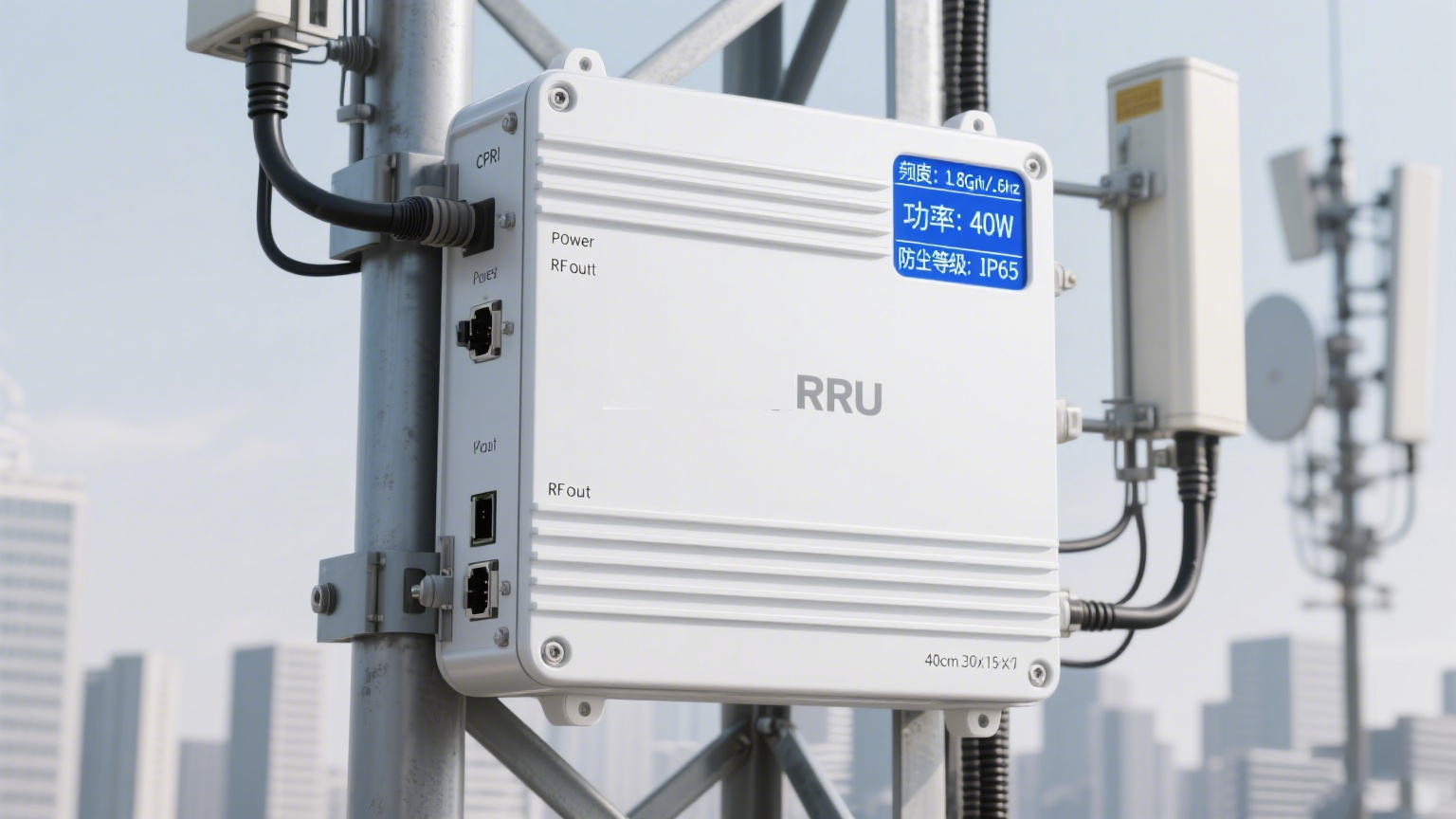
The design of modern BTS systems depends heavily on RF cable assemblies that have been carefully engineered to strike the right balance between electrical performance and space constraints. These cables connect the remote radio heads (RRHs) to the baseband units, but they also need to handle something often overlooked: thermal expansion when mounted high up on towers. According to those Cell Tower Component Guidelines we all know about, getting the routing right matters a lot because it stops signals from interfering with each other along adjacent transmission lines. And this becomes really important when towers are packed closely together in big cities where every inch counts.
Signal Integrity and Synchronization in RF Systems: Ensuring Reliable Communication Links
Three key factors govern RF cable performance in base stations:
- Impedance stability: Maintaining 50Ω uniformity across temperature fluctuations (-40°C to +85°C)
- Phase coherence: Minimizing propagation delay differences between MIMO antenna paths
- Shielding effectiveness: Achieving >90 dB EMI rejection in high-interference environments
Advanced cable designs now incorporate air-spaced dielectrics and silver-plated conductors to reduce loss to 0.5 dB/m at 6 GHz—a 40% improvement over legacy models. These enhancements enable reliable carrier aggregation and massive MIMO implementations in 5G NR networks.
Ensuring Signal Integrity Through Impedance Management and Loss Control
Impedance and Signal Loss in RF Cables: Maintaining Consistency Across Transmission Paths
Getting good signal integrity at base transceiver stations really comes down to keeping those RF cables at exactly 50 ohms throughout the whole assembly. When there's even a small deviation below 5%, say around 4.8 ohms, it creates these impedance problems that mess up high frequency signals. We see this happen all the time with 5G mmWave installations where the signals get distorted badly. According to some recent research from EMA in their 2025 report, about one third of all latency problems in city centers actually stem from coaxial lines that aren't properly matched. That's a huge number when you think about how critical reliable connections are for modern communications.
Impedance Matching Between Cables and Connectors to Minimize Reflections
Optimal power transfer requires impedance matching at all connection points. A 5Ω mismatch between cables and antennas increases signal reflections by 40%, degrading error vector magnitude (EVM) in 256-QAM modulated signals. Precision connectors with <0.1dB insertion loss help maintain VSWR below 1.5:1 across 600MHz–6GHz bands.
Voltage Standing Wave Ratio (VSWR) and Impedance Consistency in RF Cables
VSWR measurements below 1.2:1 are critical for RF cables handling 64T64R massive MIMO configurations. Corrugated copper cables demonstrate 18% better VSWR stability than smooth-walled alternatives in temperature cycling tests (-40°C to +85°C), directly impacting network uptime reliability.
Frequency-Dependent Cable Loss Characteristics and Their Impact on Performance
Modern base stations require cables with attenuation <0.3dB/m at 3.5GHz to support 100MHz channel bandwidths. While LDPE-insulated cables exhibit 22% lower loss at sub-6GHz frequencies, PTFE variants maintain stable dielectric constants up to 40GHz, making them preferable for C-band and mmWave deployments.
Minimizing Signal Degradation: Shielding, PIM, and Material Quality
Shielding and EMI/RFI Protection in Transmit and Receive Applications
The shielding technology in RF cables plays a critical role in blocking those pesky electromagnetic and radio frequency interferences that plague base transceiver stations. According to recent research from JM Test Systems back in 2023, nearly half of all telecom projects actually fail their first round of EMI compliance tests simply because the shielding wasn't adequate enough. When it comes to effective solutions, multi layer shields made from copper or aluminum can cut down EMI by over 90%. But don't forget about grounding techniques and making sure connectors are properly sealed to stop any unwanted signal leaks. In really tough operating conditions, engineers often turn to double shielded cable designs combined with foam dielectric insulation. These setups typically manage to slash noise coupling problems by around 40% when compared against standard single shield options, which makes them worth considering for installations where reliability is absolutely essential.
Passive Intermodulation (PIM) in Coaxial Cables and Its Effect on System Performance
PIM distortion happens because those nonlinear junctions inside coaxial cables create unwanted harmonics that interfere with signals. Studies indicate that when PIM gets above -150 dBc, it actually cuts down on 5G network capacity by about 20% in busy areas where lots of devices are connected at once. The good news is that top quality RF cables help combat this issue. They use specially made connectors and copper without oxygen impurities, which keeps surfaces smoother and reduces those pesky nonlinear current effects. Engineers who've done field testing report something interesting too: compression type connectors seem to cut PIM levels around 30 dBc better than traditional soldered connections do in practice.
Cable Quality and Material Impact on Signal Integrity and Long-Term Reliability
The dielectric constant and conductor purity directly affect RF cable performance. Copper-clad designs provide 25% better corrosion resistance than aluminum variants (Enconnex 2024). Foam polyethylene dielectrics exhibit 0.15 dB/m loss at 6 GHz—40% lower than solid equivalents. Silver-plated connectors maintain <1.2:1 VSWR across 100+ thermal cycles, critical for outdoor base station durability.
Low Signal Loss and Wide Frequency Range as Key Metrics for RF Cable Selection
Today's RF cables need to handle frequencies ranging from 600 MHz all the way up to 42 GHz when dealing with both 4G and 5G networks at the same time. The really good ones have low loss characteristics, something like under 0.5 dB per meter at 40 GHz, which makes a big difference in how accurate massive MIMO beamforming can be. Field tests actually showed that this kind of improvement can boost cell edge throughput by about 18%. For those looking at bandwidth capabilities, semi rigid cable designs with air spaced dielectrics tend to offer around 30% more bandwidth compared to their flexible counterparts. And let's not forget about durability factors either. PTFE jackets on these cables can stand up against UV exposure for over fifteen years without showing any signs of dielectric degradation, making them quite reliable for long term installations.
Mechanical Durability and Environmental Resilience of RF Cables
Installation Ease, Bending Radius, and Mechanical Ruggedness of RF Cables
Designing RF cables involves finding that sweet spot between being flexible enough for installation but still strong enough to hold together. One really important factor engineers look at is what's called the minimum bending radius. This basically means how much the cable can bend without damaging the inside wires. Most good quality cables follow something called IEC 61196 standards, usually allowing bends as tight as 10 times the cable's actual diameter. For situations where space matters a lot, semi rigid cables can handle pretty serious pressure too about 500 Newtons per square centimeter before they give way. And those special corrugated copper jackets? They stay pliable even when temps drop to minus 40 degrees Celsius, so these cables work well in crowded telecom stations where every inch counts. Some real world testing has actually shown that getting strain relief right cuts down on failures by around two thirds in places with lots of vibration according to last year's Telecom Infrastructure Report.
Durability Under Environmental Stress: UV, Moisture, and Temperature Resilience
Industrial-grade RF cables withstand temperature extremes from -55°C to +125°C without signal loss variance exceeding ±0.2 dB/m. Triple-layer shielding (foil + braid + fluoropolymer jacket) provides:
- UV resistance for 25+ years in outdoor installations
- Water ingress protection at 3 m depth (IP68 rating)
- Chemical corrosion resistance against pH 3–11 substances
Accelerated aging tests reveal fluoropolymer-jacketed cables retain 98% of initial flexibility after 5,000 thermal cycles (85°C to -40°C), outperforming PVC alternatives by 3:1 margins.
Role of Connectors and Junctions in Overall Cable System Performance and Reliability
More than 70% of all problems in RF systems actually start right at those connector points according to recent research from IEEE (Components, 2022). When it comes to gold plated SMA connectors, they typically hold around 1.3 or lower VSWR measurements even at frequencies reaching 18 GHz, but only if installed properly with controlled torque between 40 and 50 kgf cm. For 5G array applications across multiple bands, press fit connections combined with O ring seals perform about 15 dB better regarding passive intermodulation issues compared to traditional solder joints. And field replaceable connectors that meet MIL DTL 3922 standards cut down on base station downtime significantly, somewhere around 80% less time lost compared to older models sealed with epoxy instead.
Flexible vs. Semi-Rigid RF Cables: Application Fit in Wireless Infrastructure
Comparison Between Flexible Low-Loss Cables and Semi-Rigid Corrugated Cables
Flexible RF cables work best where things are constantly moving around, think robotic arms on assembly lines or those adjustable antennas that need repositioning all the time. What makes them special is the spiral shielding combined with thermoset jackets that let them bend without breaking down the signal quality. On the flip side, semi rigid corrugated cables stay put once installed, which is why they're so popular for stuff like tower mounted amplifiers that don't move an inch after setup. Looking at the market trends from LinkedIn data last year shows these two cable types basically run the show in telecom infrastructure today because they strike just the right balance between keeping signals strong and adapting physically to whatever installation needs come up.
Use of RF Cables in Antenna Connections and Wireless Infrastructure Deployment
Modern base transceiver stations rely on RF cables that balance flexibility and mechanical durability. Outdoor antenna arrays often utilize semi-flexible designs with IP67-rated connectors to withstand moisture ingress, while indoor distributed antenna systems (DAS) employ lightweight flexible cables for easier routing through confined spaces.
Applications of RF Cables in Base Stations and Wireless Networks: Field Performance Insights
Field data from 5G deployments highlights the importance of cable flexibility in urban environments, while semi-rigid cables remain preferred for high-power applications requiring minimal passive intermodulation (PIM). Recent advancements in low-loss materials have extended operational frequency ranges to 40 GHz, enabling reliable backhaul connections for millimeter-wave networks.
Table of Contents
- The Core Function of RF Cables in Base Transceiver Station Architecture
-
Ensuring Signal Integrity Through Impedance Management and Loss Control
- Impedance and Signal Loss in RF Cables: Maintaining Consistency Across Transmission Paths
- Impedance Matching Between Cables and Connectors to Minimize Reflections
- Voltage Standing Wave Ratio (VSWR) and Impedance Consistency in RF Cables
- Frequency-Dependent Cable Loss Characteristics and Their Impact on Performance
-
Minimizing Signal Degradation: Shielding, PIM, and Material Quality
- Shielding and EMI/RFI Protection in Transmit and Receive Applications
- Passive Intermodulation (PIM) in Coaxial Cables and Its Effect on System Performance
- Cable Quality and Material Impact on Signal Integrity and Long-Term Reliability
- Low Signal Loss and Wide Frequency Range as Key Metrics for RF Cable Selection
- Mechanical Durability and Environmental Resilience of RF Cables
- Flexible vs. Semi-Rigid RF Cables: Application Fit in Wireless Infrastructure